You’re designing a conveyor system, an automated production line, or a piece of heavy equipment. The machine needs to know when a part has reached the right position, when a door is closed, or when a moving element has reached its travel limit. That’s the job of a Limit Switch —the electromechanical sensor that detects the presence or position of an object through physical contact.
The XZ7 Series is built for these demanding applications, featuring a rugged metal housing, IP65 protection, and a 10A/250VAC switching capacity. This guide covers what makes a limit switch durable enough for harsh environments—from housing materials to sealing to actuator options—and how to choose the right one for your application.
The Environment That Tests a Limit Switch
Not every limit switch is built for the same conditions. Understanding what your equipment faces helps you choose the right level of protection.
Dust, Water, and Oil – The Three Enemies
Industrial environments are rarely clean. Dust from processing, water from washdowns, and oil from machinery are constant threats to electrical components. A limit switch without adequate sealing will fail prematurely. The XZ7 Series features a rugged metal housing that is waterproof, dustproof, and oil-resistant, built for durability in demanding environments. With an IP65 rating, it withstands dust ingress and water jets from any direction.
Temperature Extremes
From freezing warehouses to hot manufacturing floors, temperature variation stresses components. The XZ7 Series operates in temperatures from -10°C to 80°C, covering the majority of industrial applications.
Mechanical Shock and Vibration
Heavy machinery generates vibration. Limit switches near moving equipment experience constant mechanical stress. The XZ7 Series uses a zinc alloy housing that provides high mechanical strength and structural integrity, ensuring the switch stays intact and functional even under vibration.
The Electrical Specs That Define Performance
Beyond physical durability, the electrical specifications determine whether the switch can handle your circuit’s demands.
H3: Current and Voltage Capacity
The XZ7 Series is rated for 10A at 250VAC. This capacity covers most industrial control applications—from motor control circuits to PLC inputs.
H3: Contact Configuration and Response
The switch features a SPDT (single-pole double-throw) contact configuration, providing both normally open and normally closed contacts for flexible control logic. The fast and precise switching is achieved through small contact gaps, high sensitivity, and reliable response.
H3: Operating Speed and Frequency
The XZ7 Series supports an operating speed from 0.1mm to 50cm/s, with a mechanical operating frequency of 120 operations per minute and an electrical operating frequency of 20 operations per minute. This means it can keep up with fast-moving production lines while maintaining reliable contact performance.
Actuator Options That Match Your Application
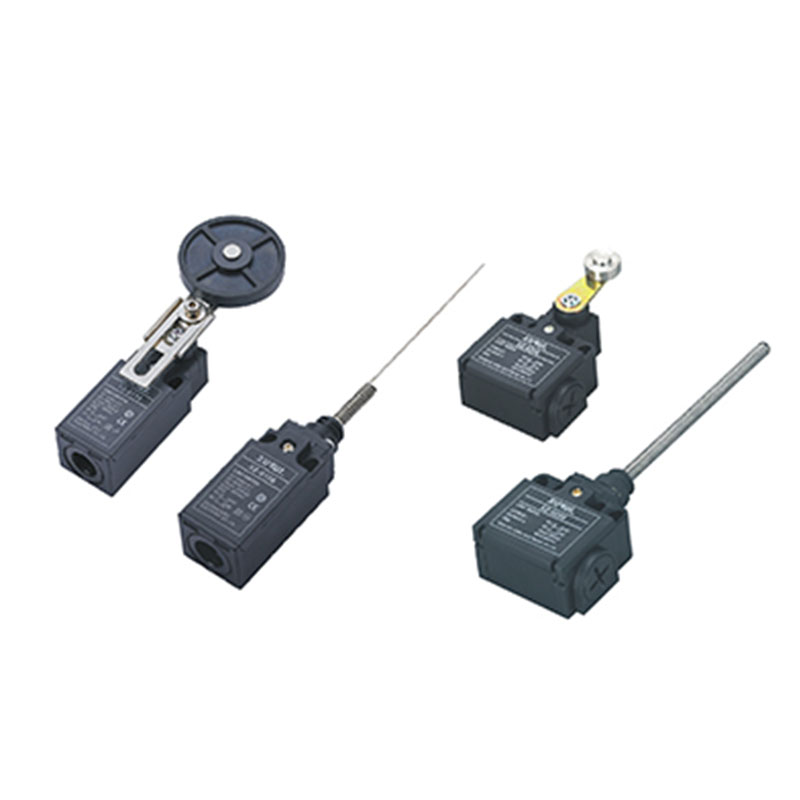
One of the key advantages of the XZ7 Series is the variety of actuator types available, allowing you to match the switch to your specific mechanical interface.
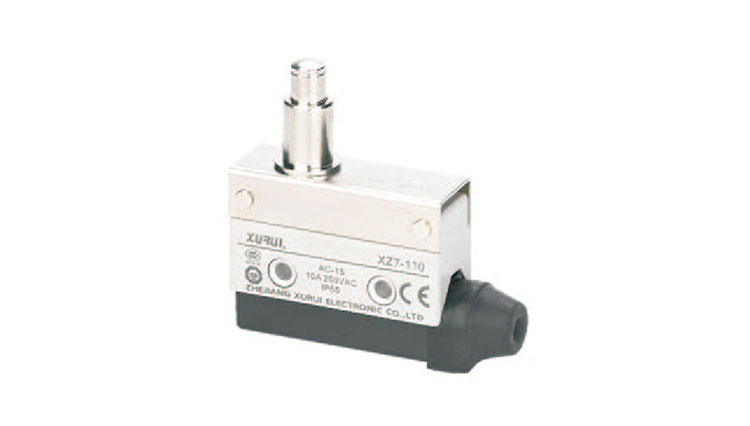
Plunger Actuators
The plunger type is activated by direct linear pressure. It’s ideal for applications where the moving object pushes directly against the switch. Models like the XZ7-110 (long plunger) and XZ7-120 (short plunger) cover different stroke requirements.
Roller Lever Actuators
Roller levers are activated by a cam or moving surface that rolls across the lever arm. They reduce friction and wear compared to standard levers, making them suitable for high-frequency applications. The XZ7-140 features a metal short handle with silver contacts and self-resetting mechanism, while models like XZ7-144 offer a single-direction pivoting roller lever.
Rod and Other Actuators
For applications requiring longer reach or specific motion profiles, rod-type and other specialized actuators are available. The XZ7 series offers a range of drive linkage options, making it adaptable to diverse equipment designs.
| Actuator Type | Model Examples | Best For |
|---|---|---|
| Plunger (short) | XZ7-120 | Direct pressure, space-constrained |
| Plunger (long) | XZ7-110 | Direct pressure, longer stroke |
| Roller lever | XZ7-140, XZ7-144 | Cam-actuated, high-frequency |
| Rod type | XZ7-166 | Long-reach applications |
Applications Across Industrial Automation
Limit switches are found in virtually every industry where machinery needs position feedback.
Conveyor Systems
On conveyor lines, limit switches detect when products reach specific stations, trigger diverters, or stop the conveyor when an object is in position. The XZ7 Series’ fast switching and durable construction handle the constant contact of passing items.
Automated Production Equipment
Robotic arms, indexing tables, and packaging machines all rely on limit switches for position confirmation. The switch tells the controller when a movement is complete, enabling precise sequencing.
Safety Interlocks
Limit switches are often used as safety interlocks on machine guards and access panels. When a guard is opened, the switch triggers a stop command. The rugged metal housing and reliable switching of the XZ7 Series make it suitable for these critical safety applications.
Elevators and Lifting Equipment
In elevators and lifting systems, limit switches prevent over-travel by detecting when the carriage has reached the top or bottom position. The mechanical durability and precise switching of the XZ7 Series support these demanding duty cycles.
The Environment That Tests a Limit Switch
What’s the difference between a limit switch and a proximity sensor?
A limit switch requires physical contact with the target object to trigger. A proximity sensor detects objects without contact, using inductive, capacitive, or photoelectric principles. Limit switches are often preferred in applications where contact is acceptable and where mechanical durability is needed—they’re simpler, more robust, and less sensitive to environmental factors like dust and moisture.
How do I choose the right actuator for my application?
The actuator type should match the motion of the object you’re detecting. Direct linear motion calls for a plunger. Rotating or sliding motion is better served by a roller lever. For long-reach applications, use a rod actuator. The XZ7 Series offers multiple actuator options to match different mechanical interfaces.
What does IP65 mean for a limit switch?
IP65 means the switch is completely protected against dust ingress and protected against water jets from any direction. For industrial environments with washdowns, dust, or oil exposure, IP65 is the minimum recommended rating.
Can the XZ7 Series handle frequent switching?
Yes. The XZ7 Series supports up to 120 mechanical operations per minute and 20 electrical operations per minute. The silver contacts provide reliable performance over thousands of cycles.
Building a Reliable Control System
A limit switch is a small component, but its reliability affects the entire system. Choosing the right switch—with the right housing, sealing, electrical rating, and actuator—prevents unplanned downtime.
Xurui Electronic manufactures the XZ7 Series for industrial automation and control applications. The series features a rugged metal housing with IP65 protection, a 10A/250VAC switching capacity, and a range of actuator options. Operating temperatures range from -10°C to 80°C, with mechanical life designed for demanding duty cycles.
Ready to Evaluate the XZ7 Series for Your Project?
The right limit switch makes the difference between a control system you can trust and one that keeps you guessing. If you’re specifying position sensing for conveyors, automated equipment, or safety systems, the XZ7 Series offers the durability and flexibility that industrial environments demand.
Reach out to Xurui Electronic’s team — they can provide detailed specifications, actuator selection guidance, and configuration support for your specific application requirements.