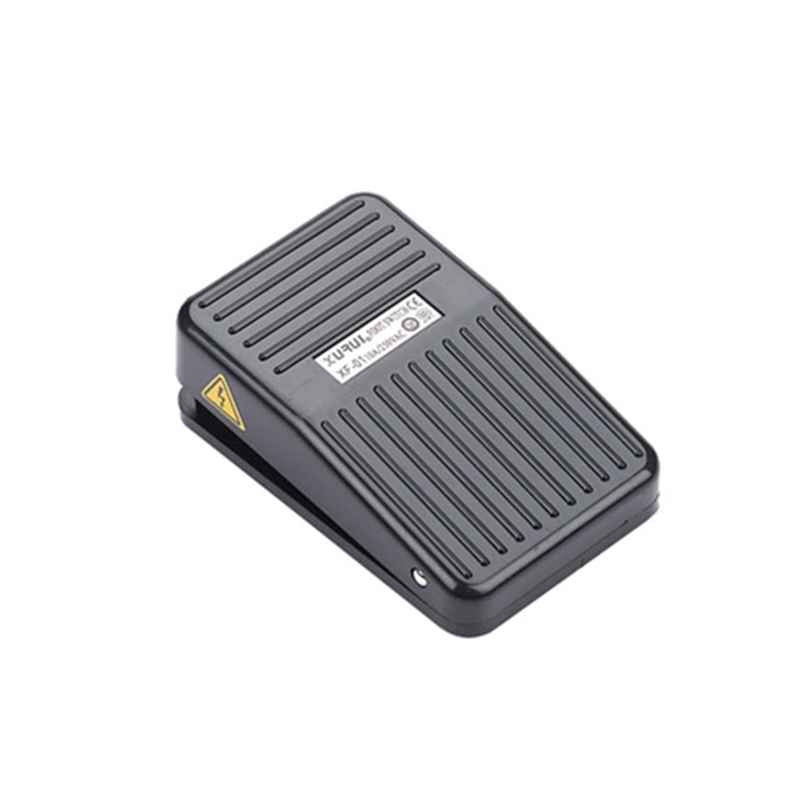
You’ve seen them on industrial machinery, medical equipment, and sewing machines—a pedal on the floor that operators press with their foot to start, stop, or control a process. A foot switch is one of the simplest control devices in industrial automation. But its simplicity is exactly what makes it so effective. It frees up both hands for the primary task—positioning material, adjusting a workpiece, or guiding a tool—while the foot handles the start/stop or mode switching. This guide covers the basic types, housing options, electrical ratings, and selection criteria. No overthinking—just the practical information you need to choose the right foot-actuated control for your equipment.
Momentary vs. Maintained — Two Ways to Control
The first decision in selecting a foot switch is the action type: momentary or maintained. Momentary switches are active only while your foot is pressing the pedal—release it, and the switch returns to its default state. This is ideal for applications like spot welding, stamping, or any operation where the machine should stop immediately when the operator lifts their foot. Maintained switches, on the other hand, stay in their activated state until the pedal is pressed again. They’re useful for applications where the machine needs to run continuously, like a conveyor belt or a testing rig, without requiring constant foot pressure.
When to Choose Momentary
Momentary action is the default choice for safety-critical operations. If the operator loses balance or needs to stop quickly, lifting the foot instantly cuts power. Pressing machines, welding equipment, and medical devices like dental chairs typically use momentary foot switches for this reason.
When to Choose Maintained
Maintained switches are better suited for processes that run for extended periods without operator intervention—think of a lathe running a long cut or a testing machine cycling through a sequence. The operator presses once to start, and the machine runs until the cycle completes or the pedal is pressed again.
Housing Materials — Matching the Switch to the Environment
Foot switches are available with several housing material options, each suited to different operating conditions.
Engineering plastic housings are lightweight, cost-effective, and corrosion-resistant. They’re suitable for clean indoor environments like medical facilities, electronics assembly, or home appliance manufacturing. Steel panel housings offer greater mechanical strength and impact resistance, making them a good choice for heavy industrial settings where the switch might be bumped or stepped on accidentally. Aluminum alloy housings provide an excellent balance of strength and weight, with good corrosion resistance. They’re commonly used in automotive manufacturing and machine tool applications. For the most demanding environments—where the switch is exposed to water, oil, or dust—protective models with an IP65 or higher rating and a protective cover are available.
The Importance of Protective Covers
Protective foot switches come with a cover that shields the pedal from accidental activation and environmental contaminants. This is particularly important on shop floors where debris, coolant, or metal shavings could otherwise interfere with the switch mechanism or cause unintended starts.
Anti-Slip and Cable Management Features
A well-designed foot switch includes practical details that make a difference in daily use. A rubber pad on the base prevents the switch from sliding across the floor during operation. A cable lock-in jacket protects the cable entry point from moisture and oil, extending the life of the wiring. These aren’t glamorous features, but they’re what keep the switch working reliably shift after shift.
Electrical Ratings — Matching Current and Voltage
Foot switches are available with a range of electrical ratings. The XF series, for example, offers current ratings of 10A, 15A, and 16A at 250VAC. The right rating depends on the load you’re switching—motors, solenoids, and heating elements all have different inrush characteristics. Always check the rated load against your application’s requirements. Under-specifying a switch can lead to contact welding or premature failure; over-specifying adds unnecessary cost.
Contact Configurations
Foot switches typically offer multiple contact configurations. The most common is 1NO + 1NC (one normally open, one normally closed). The normally open contact closes when the pedal is pressed, acting like a start button; the normally closed contact opens, acting like a stop button. This dual-contact arrangement allows the switch to control both start and stop functions in a single unit.
Temperature and Environmental Limits
Standard foot switches are rated for operation from -20°C to +70°C with humidity up to 85%. If your application involves extreme temperatures, washdown environments, or exposure to chemicals, you’ll need to specify a switch with the appropriate IP rating and material selection.
Single Pedal vs. Multiple Pedals
Most foot switches have a single pedal, but dual-pedal and triple-pedal models are also available for applications that require controlling multiple functions with one device.
Dual-pedal foot switches are common in CNC machines, where one pedal might control spindle rotation and the other controls coolant flow. In medical settings, dual-pedal switches can control different functions of an ultrasonic scaler or dental delivery system. Triple-pedal models are less common but appear in specialized applications like stage lighting control or multi-axis robotics.
Compact Dual-Pedal Designs
For space-constrained applications, compact dual-pedal models like the XF-1D and XF-85 are available. These fit into tight control panels and offer multiple contact configurations (2C, 2A, etc.) while maintaining a small footprint.
Emergency Stop Functionality
Some foot switches include an emergency stop function—a prominent red button or a dedicated pedal that immediately cuts power when pressed. These are mandatory on high-speed machinery, conveyor systems, and automated production lines where rapid shutdown can prevent injury or equipment damage.
Common Applications Across Industries
Foot switches are used wherever operators need hands-free control.
In industrial manufacturing, foot switches control punch presses, cutting machines, marking equipment, and inspection platforms. Operators keep both hands on the workpiece while the foot controls the machine cycle. In medical equipment, foot switches are found on dental chairs, surgical delivery devices, and ultrasonic scalers. In automotive manufacturing, they control welding robots, painting systems, and assembly line equipment. In woodworking, they operate shredders, engraving machines, and sanders. In logistics, they’re used on forklifts and loading equipment. In home appliances, you’ll find them on sewing machines, meat grinders, and coffee machines.
Choosing by Application
The right foot switch for a punch press isn’t the same as the right one for a dental chair. Heavy machinery requires robust construction, higher current ratings, and protective covers. Medical and light industrial applications can use simpler, plastic-housed models. Always match the switch to the demands of the application—not just the electrical load, but the physical environment and the frequency of use.
What Buyers Ask About Foot-Activated Controls
What’s the difference between momentary and maintained foot switches?
Momentary switches activate only while the pedal is pressed—release and they reset. Maintained switches stay in position after each press, toggling between on and off states. Choose momentary for safety-critical applications, maintained for continuous-run operations.
What IP rating do I need for a foot switch?
IP54 is standard for general-purpose models, offering basic dust and splash protection. For wet or oily environments, look for IP65 or higher. The right rating depends on your specific operating conditions—water, oil, dust, or chemical exposure all factor in.
What current rating should I choose?
The XF series offers 10A, 15A, and 16A options at 250VAC. Choose based on your load—motors and solenoids have higher inrush currents than resistive loads like heaters. Always check the rated load against your application.
Can I get a foot switch with multiple pedals?
Yes. Dual-pedal and triple-pedal models are available for applications requiring control of multiple functions with one device.
Find the Right Foot Control for Your Equipment
Selecting a foot switch comes down to three decisions: momentary or maintained, single or multiple pedals, and the right housing material for your environment. Request a quote or sample → —Xurui‘s team can help you match the right model to your application.
Xurui (Zhejiang Xurui Electronic Co., Ltd.), established in 2002, specializes in the development and production of electrical switches for industrial control and automation. The Foot Switch / XF Series offers a comprehensive range of models—from general-purpose momentary switches to heavy-duty protective models and dual-pedal configurations. Housing options include engineering plastic, steel panel, and aluminum alloy. Current ratings range from 10A to 16A at 250VAC. Applications span industrial machinery, medical equipment, automotive manufacturing, woodworking, and home appliances. Xurui‘s products are approved to UL, CE, and TUV standards, with a global distribution network. Contact Xurui to discuss your pedal configuration, electrical rating, and environmental requirements.