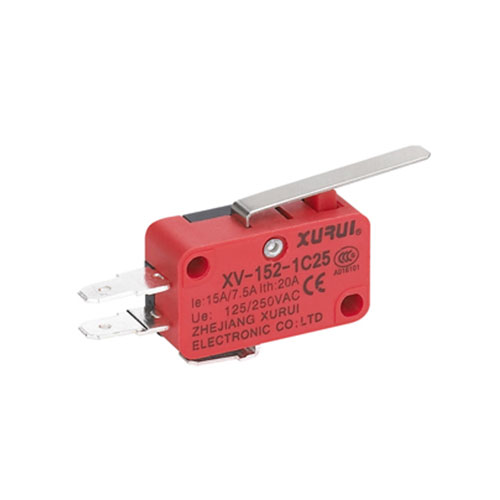
You’ve replaced the same mechanical relay three times this year. Each time, the contacts pitted. Each time, the coil failed. Each time, the machine stopped and production waited. The relay itself cost a few dollars. The downtime cost thousands.
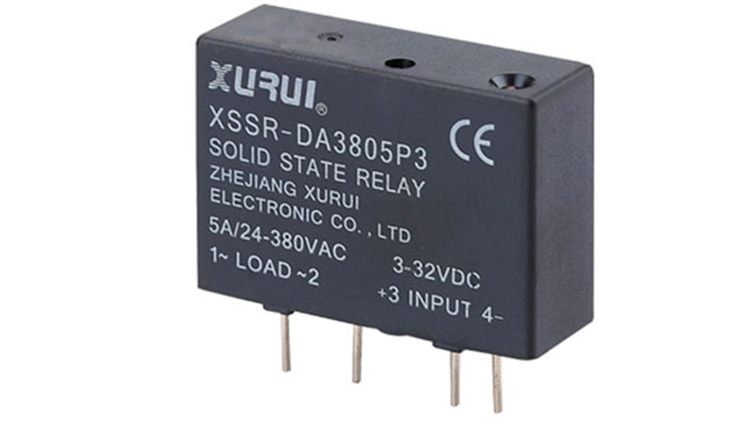
A solid state relay changes that equation. No moving parts. No contacts to wear. No arc to suppress. No audible click. Just fast, silent, reliable switching that lasts for millions of cycles. The XSSR-DA3803P3 and XSSR-DA3805P3 from Xurui Electronics are designed for modern industrial control, automation equipment, and power electronic systems. This guide covers what makes solid state relays different, how they outperform mechanical relays, and how to choose the right one for your application.
No moving parts — nothing to wear out
The simplest reason solid state relays last longer is the absence of moving parts. Mechanical relays fail because things move and wear. SSRs don‘t have that problem.
Contacts that never pit or weld
Mechanical relay contacts pit from arcing. They weld shut under fault conditions. They develop high resistance from oxidation. SSRs use semiconductor switching — triacs, SCRs, or MOSFETs. There’s no contact to pit, no arc to suppress, no oxide layer to degrade. The switching happens in the silicon, not the air.
No mechanical fatigue
Mechanical relays have springs, armatures, and moving parts. Every cycle stresses those parts. Over time, metal fatigue sets in. Springs weaken. Alignment shifts. SSRs have no springs, no armatures, no moving parts. The only fatigue is thermal — and that‘s manageable.
Infinite switching cycles (theoretically)
SSRs don’t have a finite mechanical life. The semiconductor junction doesn‘t wear from switching. In proper thermal conditions, SSRs can switch millions of times without degradation. For applications that cycle thousands of times per hour, that’s the difference between a relay that lasts months and one that lasts years.
Speed and silence — the hidden advantages
Beyond reliability, solid state relays offer performance advantages that mechanical relays can‘t match.
Switching in microseconds, not milliseconds
Mechanical relays have a response time measured in milliseconds — typically 5-15ms. SSRs switch in microseconds — often under 1ms. For applications requiring precise timing or high-speed cycling, that speed advantage is critical.
Silent operation that matters
Mechanical relays click. In a quiet control room or a medical facility, that click is noise. In a residential automation system, it’s audible. SSRs switch silently — no click, no chatter, no noise to disturb the environment.
Resistance to vibration and shock
Mechanical relays are susceptible to vibration. A strong enough jolt can cause false contact closure or opening. SSRs have no moving parts — they‘re immune to vibration and shock. For equipment in mobile or high-vibration environments — vehicles, aircraft, portable machinery — this is a critical advantage.
Solid state relay vs. mechanical — what the comparison tells you
The choice between solid state and mechanical relays comes down to the application. Here’s how they compare:
| Feature | Solid State Relay | Mechanical Relay |
|---|---|---|
| Moving parts | None | Contacts, springs, armature |
| Contact wear | None — semiconductor switching | Contacts pit and wear |
| Switching speed | Microseconds | Milliseconds |
| Audible noise | Silent | Audible click |
| Vibration resistance | Excellent — no moving parts | Poor — contacts can shift |
| Electrical life | Millions of cycles | Thousands to millions (depends on load) |
| Heat generation | Higher (semiconductor voltage drop) | Lower (mechanical contact) |
| Best for | High-cycle, high-speed, sensitive environments | Low-cycle, low-cost, simple switching |
When to choose a solid state relay
If your application cycles frequently — thousands of times per hour — the solid state relay’s infinite mechanical life is the decisive advantage. If you need silent operation, SSRs are the only choice. If vibration is a concern, SSRs are immune. For applications requiring precise timing or high-speed switching, SSRs deliver performance that mechanical relays can‘t match.
When a mechanical relay might still be the right choice
If your application switches only a few times a day, the cost of a mechanical relay may be lower. If you’re switching very high currents with minimal heat dissipation, mechanical contacts may have lower voltage drop. For simple on/off control of large loads with low switching frequency, mechanical relays can still be the right answer.
Questions control panel designers ask
Q: How long do solid state relays last?
A: In proper thermal conditions — with adequate heat sinking and within rated current — SSRs can last years or decades in continuous operation. The switching cycles are effectively unlimited. The limiting factor is thermal aging, not mechanical wear. For high-cycle applications, an SSR will outlast the equipment it‘s controlling.
Q: What is the difference between zero-crossing and random turn-on SSRs?
A: Zero-crossing SSRs turn on only when the AC voltage crosses zero. This reduces electrical noise and inrush current, making them ideal for resistive loads like heaters. Random turn-on SSRs turn on immediately when the control signal is applied, making them suitable for inductive loads or applications requiring precise timing.
Q: Do SSRs need heat sinking?
A: Yes. SSRs generate heat from the semiconductor junction. For currents above a few amps, a heat sink is required. The heat sink size depends on the load current and ambient temperature. Always follow the manufacturer‘s thermal management recommendations. An overheated SSR fails prematurely.
Q: Can I use an AC SSR for DC loads?
A: No. AC SSRs use triacs or SCRs that turn off when the current crosses zero. DC loads don’t cross zero, so the SSR would stay on. Use a DC SSR for DC loads. The output type must match the load type.
How Xurui Electronics builds reliability into the XSSR-DA series
Xurui Electronics has been manufacturing solid state relays and other industrial control products with a focus on reliability and performance. The XSSR-DA series offers long life, high reliability, fast response, and good electromagnetic compatibility — making it suitable for modern industrial control, automation equipment, and power electronic systems.
The XSSR-DA3803P3 and XSSR-DA3805P3 are designed for AC load switching with zero-crossing turn-on. The solid state design means no contacts to wear, no arcing, and no mechanical fatigue. The semiconductor switching delivers fast response and silent operation. For control panel designers and automation engineers, the combination of reliability, speed, and durability makes the XSSR-DA series a practical choice for demanding applications.
Before you specify a relay for your next project, evaluate your switching frequency, load type, and environmental conditions. The XSSR-DA series delivers the performance that mechanical relays can‘t match — and the reliability that keeps your system running.
Ready to evaluate solid state relays for your control panel or automation project? Contact Xurui Electronics for samples or a quote on the XSSR-DA3803P3/3805P3 series. Share your load type, voltage, current, and switching frequency — their team can recommend the right SSR for your specific application.