You're designing an automated production line, and the sensor needs to detect presence, position, or level without physical contact. A proximity switch that's complicated to install, prone to false triggers, or sensitive to environmental conditions becomes a maintenance headache rather than a solution. The LN8Y-Z1/Z2 circular proximity switches were engineered with simplicity in mind: shielded and non-shielded mounting options to match your installation requirements, built-in overload and short-circuit protection to prevent failures, and IP67 sealing that keeps moisture and dust out. This article walks through what makes these sensors genuinely practical—from the detection range that suits your application to the LED indicator that tells you at a glance whether the switch is working.
How to Decide Between Flush and Non-Flush Mounting?
Shielded (LN8Y-Z1) — When the Sensor Must Sit Inside Metal
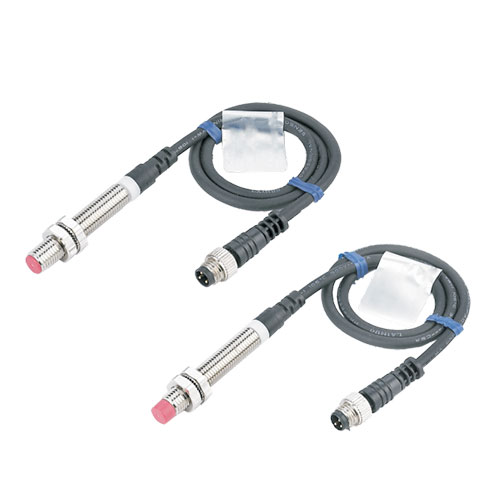
The LN8Y-Z1 is a shielded proximity switch, which can be flush-mounted in metal. The internal shielding reduces the radial magnetic field on the sides, allowing the sensor to be embedded in metal surfaces without interference. This is ideal for applications where space is tight and the sensor needs to be mounted flush with the surrounding structure.
Non-Shielded (LN8Y-Z2) — When Every Millimeter of Range Counts
The LN8Y-Z2 is a non-shielded proximity switch, which achieves a longer sensing distance—2mm ±10% compared to 1.2mm ±10% for the shielded version. However, non-shielded sensors must maintain a certain gap from surrounding metal to prevent interference. This makes them suitable for applications where maximum detection distance is the priority and flush mounting isn't required.
Why Built-In Protection Matters More Than You Think
Overload and Short-Circuit Protection — Stopping Faults Before They Start
The LN8Y series includes overload protection, short-circuit protection, reverse-connection protection, and surge absorbing circuits. These protections are built in, not optional add-ons. If you accidentally wire the sensor backwards, or if a fault causes a current spike, the protection circuits prevent damage—so you're not replacing sensors due to installation errors or electrical faults.
Reverse-Connection Protection and Surge Absorption — Guarding Against Wiring Errors
Wiring mistakes happen. The reverse-connection protection ensures that even if the power supply is connected incorrectly, the sensor survives. The surge absorbing circuits protect against voltage spikes that could otherwise damage the internal electronics. These features reduce the risk of field failures and extend the sensor's service life.
What 1.2mm vs. 2mm Sensing Distance Actually Means
Frequency and Response — Why 1.5KHz Outperforms 1KHz
The shielded Z1 offers an operating frequency of 1.5KHz, while the non-shielded Z2 operates at 1KHz (AC 20Hz for both). Higher frequency means faster response—the Z1's 1.5KHz rating makes it suitable for high-speed detection applications where objects move past the sensor quickly.
Stable Sensing Area — Where Consistent Detection Begins
The stable sensing area for the Z1 is 0-1mm, and for the Z2 it's 0-1.8mm. This is the range within which the sensor provides consistent, reliable detection. Operating within this range ensures that false triggers and missed detections are minimized.
IP67 — The Rating That Keeps Sensors Alive in the Field
Nickel-Plated Brass Housing — Corrosion Protection That Lasts
The housing is made from nickel-plated brass, providing corrosion resistance and mechanical durability. In industrial environments where sensors are exposed to coolant, oil, and moisture, this material ensures the sensor survives the conditions it's installed in.
PBT Sensing Face — Chemical Resistance for Harsh Environments
The sensing surface is PBT (polybutylene terephthalate), a tough engineering plastic that resists wear and chemical exposure. The IP67 protection degree makes the sensor water-proof, oil-proof, and dust-proof—so it keeps working even in demanding conditions.
From Liquid Levels to Production Lines — Where These Sensors Fit
Liquid Level Detection — Sensors That Work Where Water Is Constant
The sensors are widely used in water level and liquid level detection. The IP67 sealing and corrosion-resistant materials make them suitable for applications where sensors are exposed to moisture or liquids.
Production Line Positioning — Counting Parts Without Physical Contact
On automated production lines, the switches provide industrial automatic production line detection. They can detect the presence or position of parts, count items, and trigger downstream processes without contact, reducing wear and maintenance.
Safety and Alarm Applications — Detecting Position When It Matters
The switches are used for safety detection, position detection, and alarm appliance detection. In applications where equipment needs to detect the position of moving parts or ensure safety guards are in place, these sensors provide reliable, non-contact sensing.
Straight Answers on Proximity Switches
[Q: What is the difference between shielded and non-shielded sensors?
A: Shielded switches (LN8Y-Z1) can be flush-mounted in metal surfaces without interference. Non-shielded switches (LN8Y-Z2) require a gap from surrounding metal but offer a longer sensing distance of 2mm compared to 1.2mm.
Q: What built-in protections does the sensor include?
A: The LN8Y series includes overload protection, short-circuit protection, reverse-connection protection, and surge absorbing circuits. These protect the sensor from wiring errors, voltage spikes, and overload conditions.
Let's Find the Right Sensor — Flush, Non-Flush, NPN, or PNP?
A proximity switch that combines reliable detection, robust protection, and flexible installation is the foundation of any automated sensing application. The LN8Y-Z1/Z2 circular proximity switches from Xurui En deliver shielded and non-shielded mounting options, built-in overload and short-circuit protection, IP67 sealing, and LED status indication—all in a nickel-plated brass housing built for industrial environments.
Whether you're detecting liquid levels, positioning parts on a production line, or ensuring safety guards are in place, the LN8Y series offers the reliability and simplicity that automation engineers need. With a comprehensive range of models covering different output types—NPN and PNP, normally open and normally closed—you can select the exact configuration for your control system.
Contact Xurui En for a quote or technical consultation → their team can help you select the right model, mounting type, and output configuration for your specific application requirements. Get a proximity switch that simplifies detection without compromising reliability.