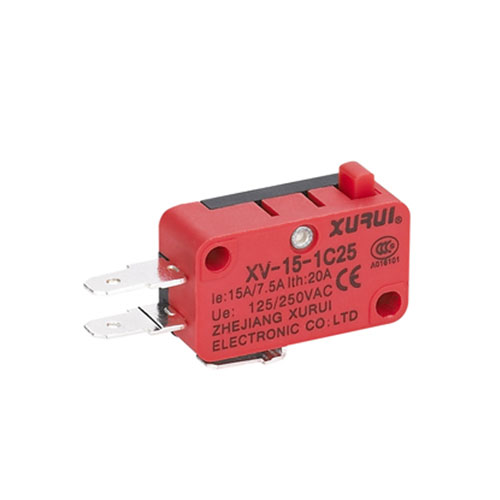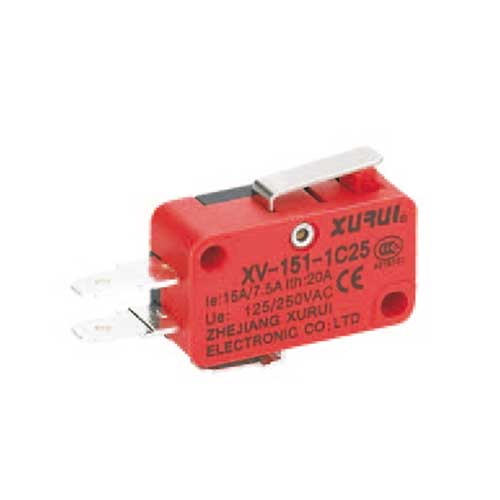
A car door latch fails to signal that the door is closed. Rainwater has been seeping into the switch for months, slowly corroding the silver contacts. A washing machine‘s lid lock works intermittently—detergent foam and humidity have breached the actuator seal. A small Micro Switch that looks identical to its non‑sealed counterpart may have an IP67 rating, but that rating is only as good as the installation. IP67‑rated sealed micro switches are built with one‑piece molded casings and sealed plungers to keep out moisture. However, exceeding the actuator travel limit, operating in chemically aggressive environments, or exceeding the electrical load can compromise the seal or the contacts long before the switch reaches its 10‑million‑cycle mechanical life. This guide explains how IP67 protection actually works, what causes the seal to fail, and how to ensure your waterproof micro switch outlasts the equipment it controls.
What the IP67 rating actually guarantees – and where it fails
The IP67 rating means the device is dust‑tight and can be immersed in water up to 1 meter for 30 minutes. This level of protection is achieved through two design features: a sealed actuator plunger (or lever shaft) with a rubber gasket, and a fully enclosed, ultrasonically welded or molded housing. Quality sealed switches use durable thermoset or thermoplastic shells with one‑piece construction that eliminates seams.
What breaks the seal. The actuator has a specified operating travel (often 1.0‑1.2 mm for common sealed micro switches). If the mechanical linkage over‑travels beyond that distance, the rubber gasket can tear or the plunger can tilt, creating a gap. In automotive door latches, repeated slamming can over‑travel the switch. In industrial limit sensing, a misaligned cam can drive the actuator past its limit. Once the seal is compromised, moisture enters, and the switch will fail—often within weeks.
Preventing seal failure. Install the device so that the actuator is triggered within its specified travel range. Use an adjustable actuator arm or limit stop to prevent over‑travel. If the application inherently has large mechanical travel, use a switch with a roller lever that absorbs excess motion, or mount the switch on an adjustable bracket.
Three signs that water has already gotten inside
When moisture does get inside a sealed snap‑action switch, the damage follows a predictable pattern. Early signs: intermittent operation. The switch works when dry but fails after a car wash or a rainy day. The contacts may show light oxidation. Use a multimeter to check continuity after the switch has been exposed to moisture. Advanced signs: visible corrosion. Open the switch (if repairable) and look for green or white deposits on the contacts or terminals. This corrosion increases contact resistance and generates heat. The insulation resistance between terminals and case will drop below the 100 MΩ minimum. Final stage: complete failure. The contacts may weld open or closed, or the internal spring may corrode and break. The switch no longer clicks when actuated. If you observe any of these signs, replace the micro switch immediately. Do not attempt to clean or repair internal contacts—the integrity of the seal is already lost.
Why the contact material makes the difference in wet environments
The contacts inside a small waterproof sealed switch are typically made of silver alloy (e.g., AgNi, AgSnO₂, or AgCuO), not pure copper. Silver‑alloy contacts offer three benefits for wet environments: they resist oxidation (silver oxide is still conductive, unlike copper oxide), they withstand arcing better (reducing the risk of contact welding), and they maintain lower contact resistance over time.
When silver contacts still fail. Even silver alloys cannot withstand sustained overcurrent or excessive switching rates. A typical sealed snap‑action switch is rated for 15A at 250VAC for resistive loads. Switching inductive loads (motors, solenoids) derates the contact life significantly. The electrical operating frequency is typically 20 operations per minute; exceeding this rate accelerates contact wear and can lead to welding.
How to protect the contacts. For loads above 5A inductive, use a relay or contactor to switch the heavy current, and let the micro switch control the relay coil only. This extends the life of the device by a factor of ten.
Two series designed to survive washdowns and humidity
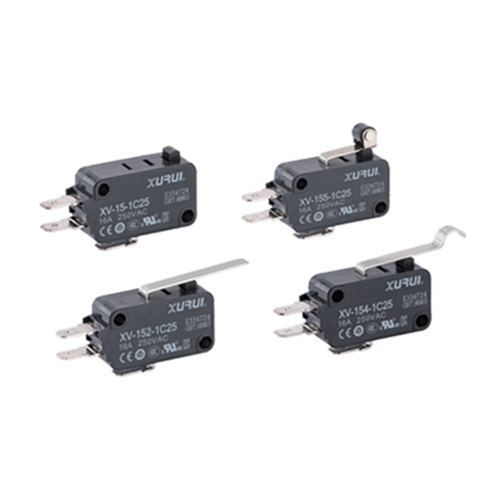
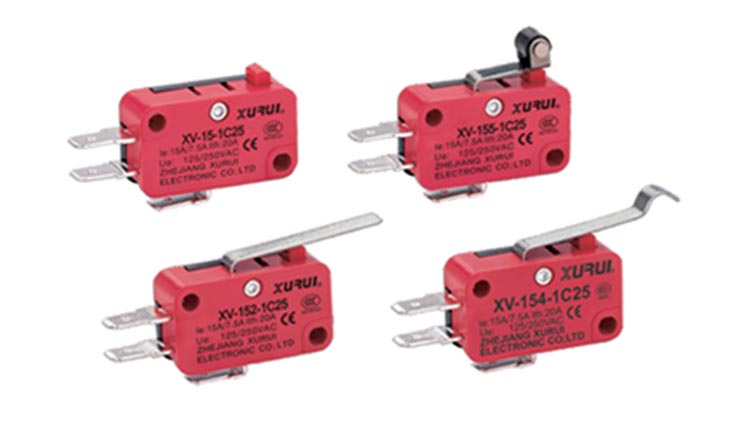
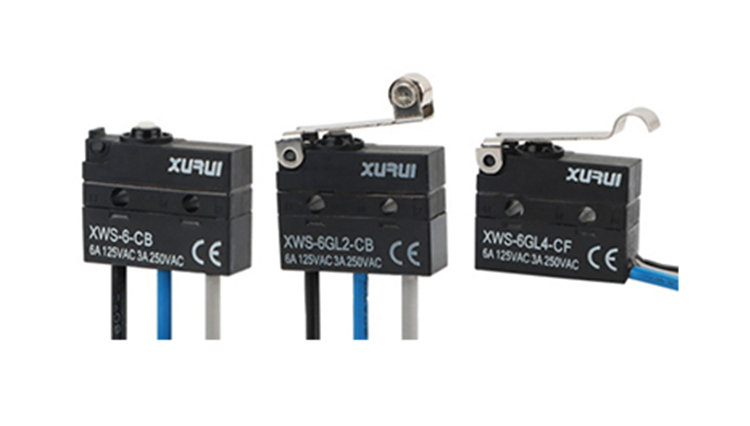
Reputable manufacturers offer two common families of sealed micro switches. General‑purpose waterproof switches typically carry IP67 ratings, silver‑alloy contacts, and mechanical lives of 10 million cycles. They are available with pin plunger, short hinge lever, long hinge lever, and roller lever actuators. Enhanced‑protection series are specifically designed for applications requiring superior moisture resistance, with fully sealed housings and IP67 certification. Both families are UL, CCC, and CE certified, and are used in automotive door latches, sunroof mechanisms, seat position sensors, washing machine lid interlocks, dishwasher door switches, and outdoor industrial limit sensing.
Small changes in mounting that keep moisture out for years
Follow these guidelines to ensure the IP67 seal remains effective throughout the equipment‘s life.
Do not use the actuator as a mechanical stop. Design the linkage so that a separate hard stop limits travel, not the switch’s internal mechanism.
Use the correct actuator type. For applications with variable or long travel, use a roller lever actuator. The rolling contact reduces friction and wear on the seal.
Mount with the actuator facing downward. If possible, orient the switch so that moisture drains away from the actuator opening rather than pooling around it.
Inspect the seal during preventive maintenance. Every 500,000 cycles or annually, check the actuator boot for cracks, hardening, or deformation. Replace the switch if the boot shows wear.
What design engineers ask before specifying a sealed switch
Unsegmented (single continuous paragraph)
Q: What is the difference between IP67 and IP68 for a micro switch? A: IP67 protects against temporary immersion (1 m for 30 min). IP68 is for continuous immersion under conditions specified by the manufacturer. Most sealed micro switches are IP67; IP68 is rare and typically requires custom designs.
Q: Can I solder wires to a sealed micro switch without damaging the seal? A: Soldering directly to the terminals can melt the plastic housing and compromise the seal. Use quick‑connect terminals or screw terminals instead. If you must solder, use a high‑wattage iron (minimum 60W) for less than 3 seconds per terminal, and clamp a heat sink between the terminal and the housing.
Q: How do I test the IP67 seal in the field? A: You cannot easily test the seal without specialized equipment. Instead, inspect for signs of moisture ingress: intermittent operation after rain, visible corrosion on terminals, or a drop in insulation resistance below 100 MΩ. Replace the switch if any of these appear.
Q: What is the expected service life of a sealed micro switch in a car door? A: In a typical passenger car door latch (5‑10 operations per day, 10‑15 years), the mechanical life of 10 million cycles is far beyond the vehicle‘s life. However, the seal may degrade after 5‑7 years due to temperature cycling and UV exposure. Schedule replacement of door latch micro switches at the 7‑year mark for high‑reliability fleet vehicles.
The brand behind reliable sealed micro switches
When a design requires a Micro Switch that will survive washdowns, outdoor exposure, or automotive moisture, established manufacturers like Xurui Electronic offer reliable solutions. Their XZ‑15G and XWS‑6 series provide drop‑in replacements, with the XZ‑15G rated for 15A at 250VAC, silver‑alloy contacts, and IP67 sealing. The XWS‑6 offers enhanced moisture protection for demanding applications. Xurui, founded in 2002, holds over 30 national patents and serves customers in home appliances, automotive electronics, industrial automation, medical devices, and instrumentation.
For engineers selecting a small waterproof micro switch, the combination of IP67 sealing, silver‑alloy contacts, and a 10‑million‑cycle mechanical life provides a baseline for reliable operation in wet environments—provided the actuator travel is controlled and the electrical load stays within rating.
→ Request a quote from Xurui Electronic for the Small Waterproof Sealed Micro Switch — Share your required current (A), voltage (V), actuator type (pin plunger, lever, roller), and environmental rating (IP67 or higher). Their technical team will recommend the right XZ‑15G or XWS‑6 configuration.