A packaging machine builder was wiring a rotary palletizer that needed to know its shaft position at five different angles. The design used five inductive proximity sensors, each aimed at a separate metal flag on a disc. Each sensor required its own cable back to the control panel, its own PLC input point, and its own diagnostic check. The panel was crowded, the wiring took four hours per machine, and field technicians often misaligned one of the sensors during maintenance, causing phantom stops.
An engineer on the assembly line suggested replacing the five sensors with a single limit switch that had five internal contacts, each triggered by a different lobe on one cam. The multi‑position switch mounted directly on the shaft, required one cable with five wires instead of five separate cables, used only one PLC input card instead of two, and eliminated the alignment issue entirely. The alternative was not just a wiring cost; it was a lifetime of callbacks for misaligned sensors.
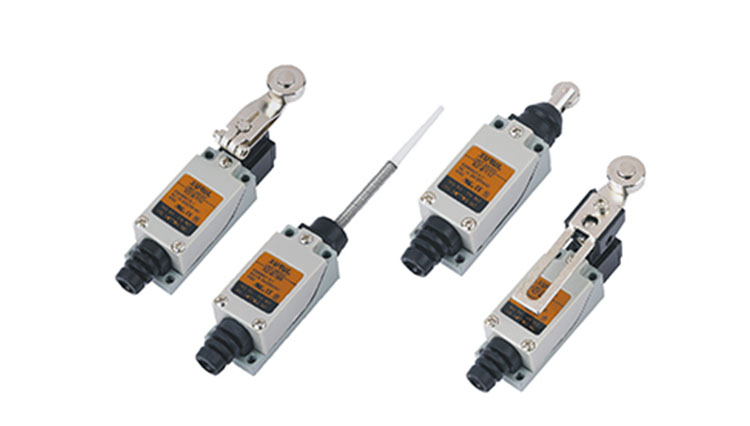
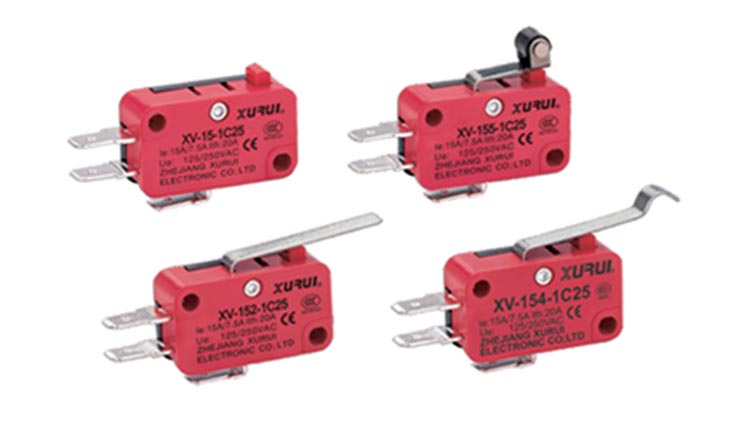
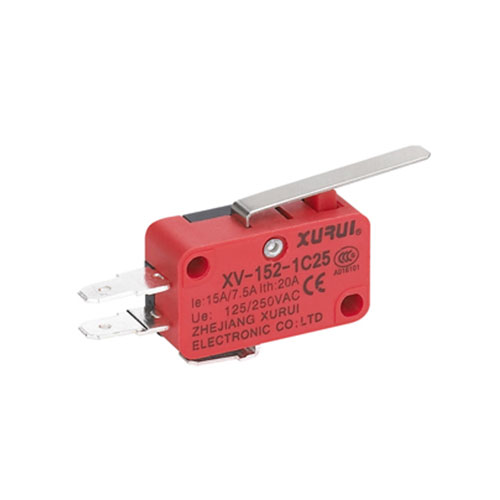
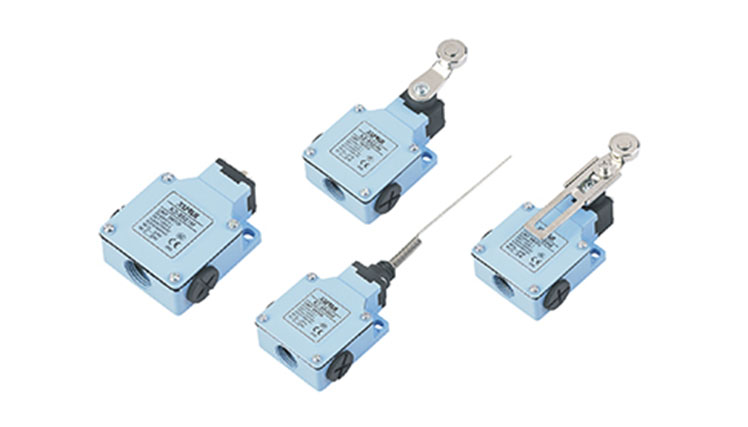
The metal multi‑position output limit switch from XURUI Electronics is built for exactly those machines. A single cam on the rotating shaft actuates up to five independent micro switches, each closing at a different angular position. The device delivers 5A/250VAC switching, survives vibration up to 10‑55Hz (1.5mm amplitude), seals to IP65 against factory dust, and carries UL, CE, and TUV marks for global machine safety compliance. This article explains what multi‑position output costs in cam machining versus what it saves in panel space, why a cam‑operated switch never suffers from target misalignment the way a proximity sensor does, and where the mechanical life rating of one million cycles actually runs out.
Five outputs from one device: the cam that replaces five sensors and four brackets
A rotary shaft on a palletizer needs to signal five positions: home, 90°, 180°, 270°, and a pre‑stop deceleration point. The sensors‑on‑a‑disc approach needs five separate devices, each requiring mounting, alignment, and a cable. The multi‑position limit switch mounts a single cam directly on the shaft. The cam is machined with lobes that push a plunger for each micro switch at the desired angles. The internal switch array is fixed; only the cam shape changes. When the cam rotates, each lobe actuates its assigned switch, and the corresponding electrical contact changes state.
What happens when one of five prox sensors gets knocked out of alignment
A shock to a palletizer arm can shift a proximity sensor bracket by 2mm. The sensor no longer sees its target flag. The PLC receives no signal, and the machine faults. A technician must loosen the bracket, reposition the sensor, and retighten the fasteners – a maintenance call. The cam‑operated limit switch has no bracket. The cam is keyed to the shaft. There is no alignment to lose. The switch’s internal plungers are hard‑mounted to the housing. The cam lobe position relative to the plunger is fixed by the shaft key. A shock that twists the shaft enough to affect the cam angle would have already broken the coupling – a far more severe failure. For daily operation, the multi‑position switch is effectively immune to the “sensor bumped out of place” call.
The wiring cost that disappears when you run one multiconductor cable instead of five sensor leads
Each inductive proximity sensor needs a three‑wire cable (power, ground, signal). For five sensors, that is 15 conductors. Inside the control panel, that occupies five terminals or five input modules. A multi‑position output limit switch has a common or returns all five signals through a single multiconductor cable (typically 7‑12 wires). The panel requires only one cable entry gland and one terminal block.
The panel builder quoted in the opening reduced his wiring labour by 75% per machine after switching to the multi‑position switch. The field service team stopped receiving calls for “proximity sensor out of alignment.” The machine owner saved the cost of two input cards.
Why the cam's mechanical accuracy outperforms sensor‑to‑target gap variation
Proximity sensors have a specified sensing distance, usually in the range of 2‑8mm. The target flag must pass within that distance consistently. In practice, shaft runout, bearing wear, and thermal expansion can change the gap. When the gap exceeds the sensing range, the sensor drops out. The cam‑operated switch’s plunger is either in direct contact with the cam lobe or not. There is no gap. The switching point is determined by the cam lobe profile, not by a mm‑scale air gap. For dirty environments with grease or dust, the direct contact mechanism of a limit switch is more reliable than a proximity sensor whose sensing face can become coated.
| Feature | Five Proximity Sensors | One Multi‑Position Limit Switch |
|---|---|---|
| Mounting brackets | 5 | 1 (cam on shaft) |
| Cables | 5 | 1 |
| PLC inputs | 5 dedicated | 5 on one card (or 5 inputs) |
| Field alignment | Required per sensor | None (cam keyed to shaft) |
| Sensitivity to dust/contamination | Yes (sensing face coating) | No (direct mechanical contact) |
| Diagnostic fault for “missing signal” | Cannot distinguish sensor from wiring | Switch status indicator visible |
IP65, vibration, and the metal housing that survives a crane bridge
A multi‑position limit switch installed on a crane trolley sees constant low‑frequency vibration. The trolley wheels run on steel rails, and the entire structure shakes. A plastic‑housed switch could crack at the mounting flange over time, leading to moisture ingress and contact failure. XURUI’s version uses a zinc alloy housing with a gasketed cover. The IP65 rating means it is dust‑tight and protected against low‑pressure water jets – adequate for a dry crane bridge or a dusty palletizer bay. For washdown environments, the XZ5 series (IP66) is available.
The vibration test standard for industrial limit switches is 10‑55Hz at 1.5mm amplitude. That is the standard for railway and heavy industrial components. The switch is also shock‑tested to withstand impacts from tool changes and carriage stops.
Mechanical cycles vs electrical cycles: when to replace the cam
The switch’s mechanical life is specified at >1,000,000 operations. Electrical life at rated load (5A/250VAC resistive) is >100,000 operations. For a switch that triggers every cycle of a high‑speed palletizer running at 30 cycles per minute, the electrical life runs out in about 55 days of continuous operation. In practice, the load on the switch is often lower – a PLC input draws milliamps, not 5A. For dry contact switching, the electrical life extends closer to the mechanical life. If the switch is used to directly power a contactor coil (inductive load), the contact erosion is much faster.
| Load Type | Contact Life Expectancy |
|---|---|
| PLC input (5‑20mA DC) | Near mechanical life (>1,000,000) |
| Resistive load (5A @ 250VAC) | ~100,000 operations |
| Inductive load (AC‑15) | Derate by 30‑50% |
For a customer who needs to switch a 2A motor starter directly, the multi‑position limit switch should be used to control an intermediate relay. The relay’s contacts handle the inrush current, and the switch contacts last much longer.
How the metal multi‑position output limit switch fits into a machinery OEM’s component selection
XURUI Electronics has manufactured limit switches, micro switches, and solid‑state relays for over 20 years, holding 65 technology patents and ISO 9001 certification. The metal multi‑position output limit switch is part of a family that includes the XZ5 washdown‑rated series and the XZ9 miniature limit switches. All carry UL, CE, and TUV marks, simplifying machinery certification for export to North America and Europe.
The switch is supplied with a standard cam profile. For applications requiring custom angular positions, XURUI’s engineering team provides a cam‑machining drawing based on the customer’s angle table. The switch housing accepts a 9‑16mm shaft diameter with a keyway.
For a limit switch that eliminates the alignment headaches of multiple proximity sensors and the wiring cost of five separate cables, the XURUI metal multi‑position output device delivers cam‑actuated reliability, IP65 sealing, and a one‑million‑cycle mechanical life for rotating machinery – from palletizers to tool changers to crane trolleys.
【Request a quote from XURUI Electronics】
Send XURUI your required number of output positions, shaft diameter, and the angular positions (in degrees) where each contact must close. A custom cam drawing and a switch quotation will be returned within one business day.