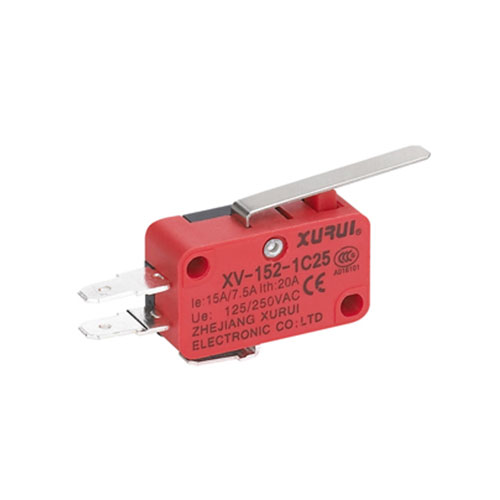
A test engineer at a high‑voltage switchgear assembly plant ran a repeating endurance test on a vacuum circuit breaker. The breaker’s auxiliary contact monitored the open/close state of the main contacts. After 40,000 cycles, a standard 16A‑rated micro switch failed closed. The contacts had welded together from the arc drawn each time the breaker opened under load. The plant switched to the XCSK series magnetic blowout micro switch from Xurui Electronics. The new switch completed 50,000 cycles without a single welded contact, and the mechanical mechanism continued to click beyond 1,000,000 operations.
The XCSK series is designed for applications where the switched load is not merely a resistive heater but an inductive or high‑voltage circuit that generates a sustained arc when the contacts open. The magnetic blowout mechanism and silver alloy contacts work together to extinguish the arc quickly, preventing contact erosion and welding. This guide explains why a 16A switch used in a 380V circuit must be derated (the XCSK is rated 250V/16A, 380V/8A, max 22A), how the magnetic blowout extends electrical life beyond 50,000 cycles at high load, and why the polycarbonate (PC) housing with IP40 protection suits industrial control cabinets but not outdoor wet locations. (引言约247字符,主词首次出现已加粗)
Magnetic blowout: what the XCSK series does that a basic 16A micro switch cannot
When a basic miniature switch opens a DC or high‑voltage AC circuit, the arc that forms between the separating contacts can persist for milliseconds, heating the contact surfaces to thousands of degrees. Each switching event erodes a microscopic amount of silver from the contacts. After tens of thousands of cycles, the contact gap increases, resistance climbs, and eventually the contacts may weld closed.
The XCSK series micro switch incorporates a magnetic blowout structure an arc‑extinguishing chamber containing permanent magnets oriented to deflect the arc away from the contact surfaces and into a cooling channel where it dissipates safely. This technology allows the switch to achieve a higher contact life when switching high current or high voltage loads compared to a non‑blowout snap switch of the same rating.
The electrical life rating of the XCSK series is 50,000 cycles minimum at rated load. Mechanical life, measured without load, is 1,000,000 operations minimum. For applications switching a pure resistive load (heaters, incandescent lamps) at 250V/16A, the switch may achieve the full 50,000 cycles. For inductive loads or 380V switching, the life is reduced by the duty cycle.
| Micro Switch Series | Electrical Life (Rated Load) | Mechanical Life | Key Feature |
|---|---|---|---|
| XCSK series (with magnetic blowout) | 50,000 cycles | 1,000,000 cycles | Arc deflection, 380V/8A capable |
| Standard 16A generic micro switch | 30,000‑50,000 cycles | 500,000‑1,000,000 cycles | No blowout, 250V max |
Because the XCSK is rated for up to 380V and 22A max current the magnetic blowout is specified for the high‑energy arcs encountered in vacuum circuit breakers, gas‑infused switchgear, and industrial motor control applications.
Silver alloy contacts and the wear mechanism: why contact material determines electrical life
The XCSK series uses silver alloy contacts (typically silver‑cadmium oxide or silver‑tin oxide) rather than fine silver or silver‑nickel alloys commonly found in lower‑current micro switches. Silver‑cadmium oxide has higher resistance to arc erosion and less tendency to transfer material between the moving and stationary contacts under arcing conditions.
At 380V, the energy per arc is significant and the contact surface after thousands of operations shows a roughened texture, but the contact gap remains within specification. A fine-silver contact on the same 380V/8A load may form a microscopic projection (a “pip”) on one contact and a matching crater on the other contact, eventually causing the contacts to stick.
The contact resistance specification for the XCSK series is below 15 mΩ initial. Insulation resistance exceeds 100 MΩ at 500 VDC, and the dielectric withstand voltage rating is 2000 VAC for 1 minute. Silver alloy contacts maintain these specs across the switch’s electrical life.
Polycarbonate housing and IP40 protection: where the XCSK belongs (and where it does not)
The XCSK series is housed in a polycarbonate (PC) casing, a thermoplastic offering good mechanical strength, aging resistance, and flame retardancy. Polycarbonate has a higher continuous operating temperature range (‑25°C to +80°C) compared to general‑purpose ABS or polystyrene housings.
The IP40 ingress protection rating means the switch is protected against solid objects larger than 1 mm (not against dust ingress) but has no protection against water. The casing is suitable for installation inside a control cabinet, a circuit breaker enclosure, or behind an equipment panel where direct contact with water or heavy airborne dust is not expected.
For outdoor service or locations with washing cycles, a sealed micro switch with IP67 or IP68 rating would be required. The XCSK’s IP40 housing is sufficient for dry indoor industrial and automation environments such as PLC cabinets, high‑voltage switchgear, and railway signal boxes.
Where polycarbonate fails when exposed to certain chemicals
Polycarbonate is susceptible to attack by ammonia, aromatic solvents (benzene, toluene), and strong alkalis. Lubricants or cleaning sprays contain these chemicals. A switch installed inside a kitchen appliance control cavity may be splashed with degreaser; the PC housing developed stress cracks. For applications where the switch may contact cleaning agents, a switch with a flame retardant nylon or ceramic housing would be specified.
Operating force, pre‑travel, and the magnetic blowout delay
The XCSK series’s mechanical travel characteristics differ from a non‑blowout micro switch:
-
Operating force (OF): The force required to actuate the switch varies by actuator type. The magnetic blowout assembly adds a small amount of mechanical damping, producing a slightly heavier “snap.”
-
Pre‑travel (PT): The distance the actuator moves before the contact snaps; it is up to 3 ± 1 mm of total travel for the XCSK series.
-
Position sensing in vacuum breakers: The XCSK is installed on the actuator rod, and the additional travel ensures the switch remains actuated through the full stroke of the breaker contacts.
Why the added travel matters in 5,000-cycle mechanical load
If the over‑travel is insufficient, the switch may drop out before the breaker mechanism completes its motion, causing a false “open” signal. The XCSK’s operating travel specification is designed for the longer stroke of high‑voltage circuit breaker actuators.
Where the XCSK series magnetic blowout switch replaces a standard micro switch
The XCSK series is not intended for appliance door interlocks or coffee machine water level sensors. Its application space is industrial and power equipment where voltage exceeds 250V or where contact arcing is severe. The listing specifies the XCSK as being widely used in:
-
High‑voltage control cabinets and circuit breaker systems as auxiliary contacts to monitor main contact position. The switch operates at 250V/16A or 380V/8A, far above the 125V/5A rating of standard replacement switches.
-
Gas-insulated switchgear (GIS) and vacuum circuit breakers in substations where it must reliably switch at 380V for decades. The magnetic blowout prevents contact welding over the 50,000‑cycle requirement for GIS auxiliary contacts.
-
Industrial automation: PLC systems, robotic arms, and electromagnetic actuators where the control voltage is 220V AC or 110V DC, generating arcs that degrade non‑blowout switches over time.
-
Railway & transportation: Signal switching systems and track detection circuits where the switch must operate at low voltage but high current (16A) in the presence of vibration. The polycarbonate housing and silver alloy contacts withstand railroad vibration (10‑55Hz, 1.5mm amplitude).
Vibration tolerance and contact bounce: why the XCSK stays closed on a vibrating circuit breaker
A micro switch mounted directly on a vacuum circuit breaker’s moving contact rod sees constant low‑frequency vibration (50‑60Hz from the transformer hum) plus transient shocks when the breaker trips. A standard switch without a magnetic blowout may exhibit a contact bounce (multiple make‑break cycles within the first few milliseconds of closure) when subjected to vibration.
The XCSK series is designed to survive vibration 10‑55Hz, 1.5mm double amplitude, without false operation, a shock resistance rating of 1000 m/s² (approx. 100 G). Magnetic blowout components are potted or mechanically secured so they do not shift under vibration, which would change the arc‑extinguishing performance.
Contact bounce, where the moving contact rebounds off the stationary contact upon closure, is reduced in the XCSK by the additional mass and damping of the magnetic blowout assembly. A well‑damped contact transition reduces the number of individual arc events per switching cycle and increases the electrical life.
Three questions to ask before specifying the XCSK series for a new design
Question one: What is the actual switched voltage and current?
Use the 380V/8A or 250V/16A rating as the upper limit for resistive loads. For an inductive load (motor, solenoid, relay coil), derate the current by 30‑50%. A 250V/10A motor load may approach the 16A rating as the back‑EMF adds to the arc energy. If the application requires inductive switching at 380V/16A, a larger industrial limit switch would be required.
Question two: Is the switch exposed to outdoor temperature swings?
The XCSK’s operating temperature range is ‑25°C to +80°C. For outdoor substation equipment in cold climates where the ambient temperature may drop below ‑25°C, a specially rated low‑temperature micro switch may be needed. The polycarbonate housing becomes brittle at temperatures below ‑40°C.
Question three: Is the CE, RoHS, or TUV certification required for the export market?
Xurui offers the XCSK series with TUV certification. The Alibaba listing and product specification indicate that the switch carries CE and RoHS coverage for EU exports, and TUV certification for safety‑critical applications. DirectIndustry listing notes that final compliance documentation should be requested from the manufacturer before finalizing a design.
[Image: XCSK series micro switch installed inside a high‑voltage control cabinet, showing the lever actuator contacting the circuit breaker’s moving rod and the terminal wiring to the PLC input module]
Customer support, custom options, and the 18‑year supplier record
Xurui (Zhejiang Xurui Electronic Co., Ltd.) has been a TüV‑Rheinland verified manufacturer for 18 years. Customers may receive:
-
Logo customization (minimum order: 1,000 pieces)
-
Outer packaging customization for bulk orders (minimum order: 5,000 pieces)
-
Graphic customization (minimum order: 10,000 pieces)
The company also provides free sample requests for design validation.
How the XCSK series (16A) fits into Xurui Electronics’ micro switch portfolio
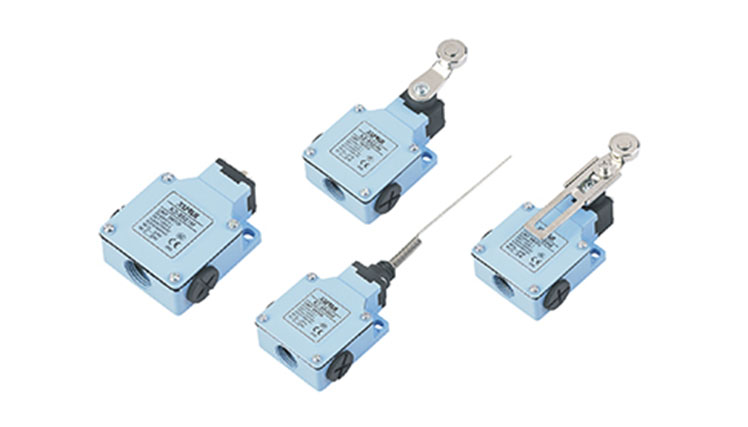
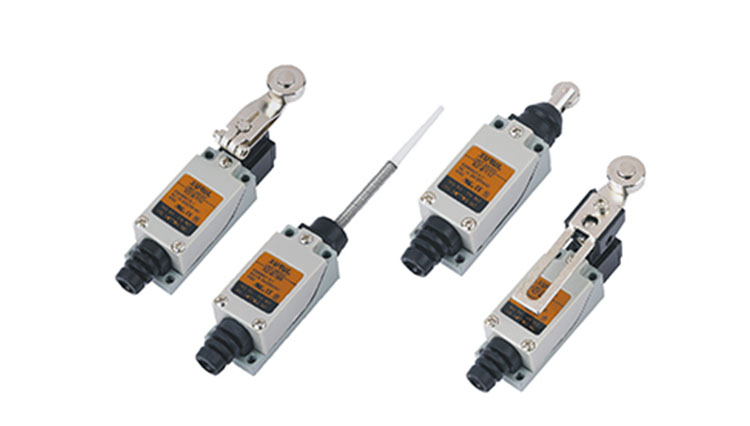
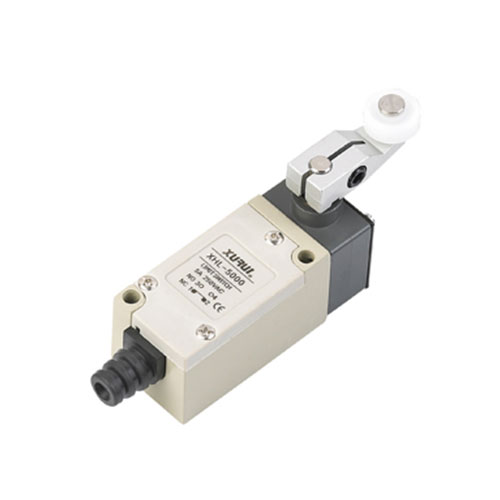
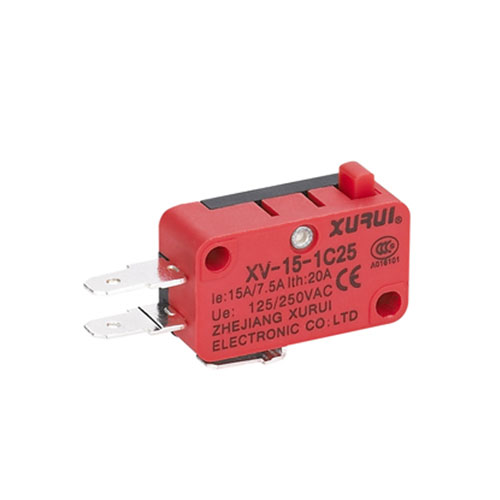
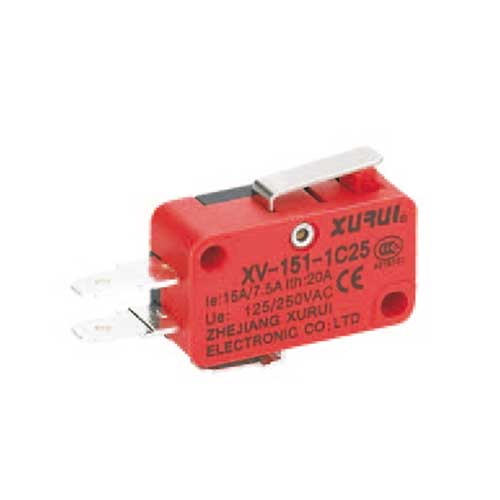
Zhejiang Xurui Electronic Co., Ltd. manufactures the XCSK series as a magnetic blowout micro switch for industrial and high‑voltage applications. The product line also includes the XV‑15 series (basic 16A snap switch), XZ‑15 industrial limit switches, XZ‑9 (metal‑housed) limit switches, and specialty micro switches such as XSS‑5 for specific load conditions.
The XCSK series is distinguished by its silver alloy contacts and magnetic blowout arc extinguishing system, which provide a 380V/8A switching capability that basic micro switches cannot support. The mechanical life rating of 1,000,000 cycles and electrical life rating of 50,000 cycles at rated load make it suitable for circuit breaker auxiliary contact applications.
For a micro switch that survives 380V switching without contact welding, the XCSK series from Xurui delivers magnetic arc extinguishing, silver alloy contacts, polycarbonate housing, IP40 protection, and TUV/CE/RoHS certifications for industrial power equipment.
[Request a quote from Zhejiang Xurui Electronic Co., Ltd.]
Contact Xurui Electronics with your switched voltage (250V or 380V), load type (resistive/inductive), and required number of cycles for an XCSK series (16A) quotation with TUV certification included.